

By: Visiting Fellow Merrill Brown and Research Assistant Jacob Spudich
Introduction
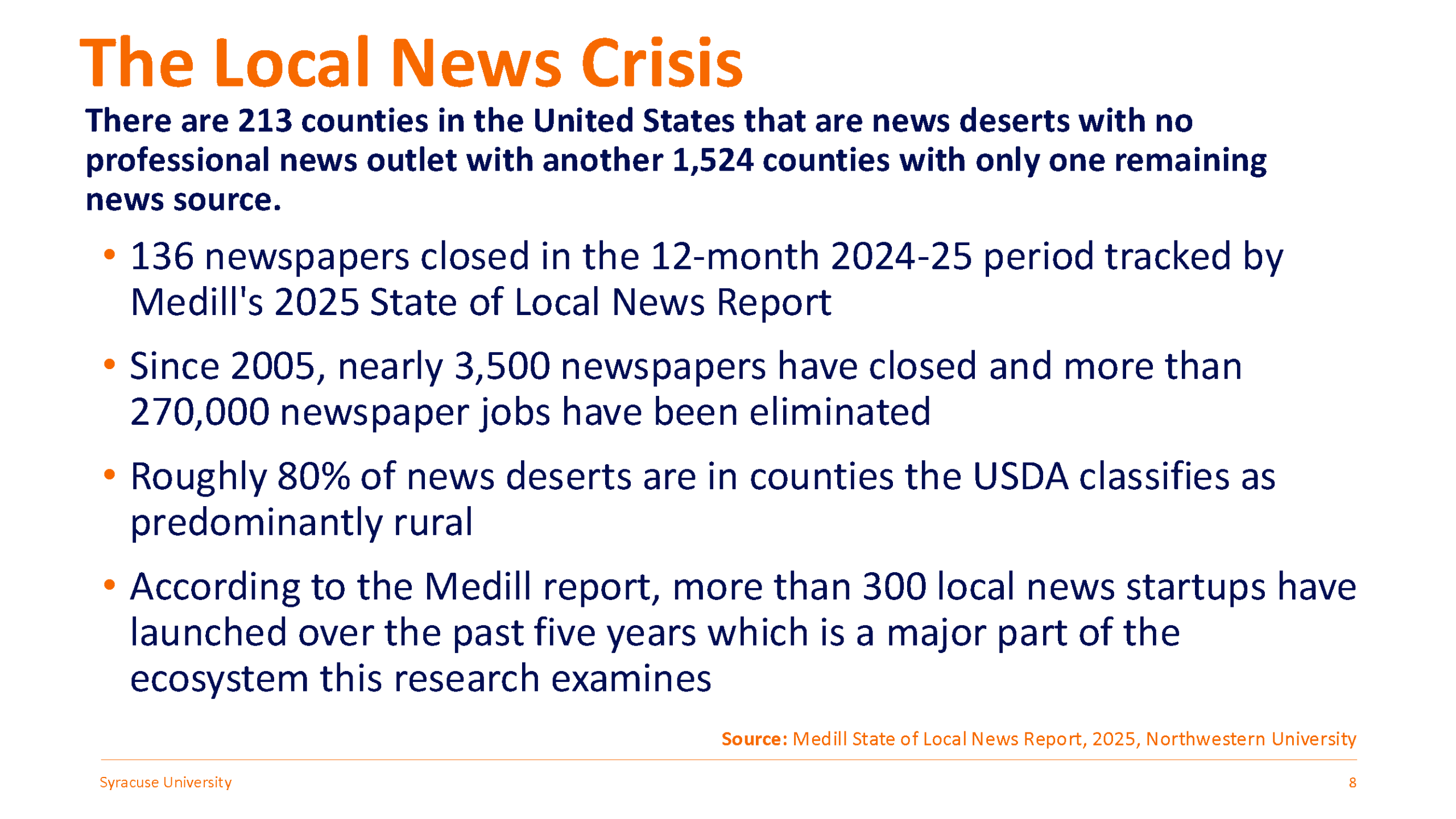
There is no longer much debate about the dimensions of the local news crisis in the United States. Thousands of newspapers have disappeared, newsroom employment has collapsed and hundreds of communities have little or no consistent professional news coverage. What remains much less clear is what will replace what has been lost.
Over the past several years, one answer has begun to emerge. Across the country, journalists, entrepreneurs and community leaders are creating independent local news organizations—often small operations built around websites, newsletters and social platforms, and frequently started by one or a small number of people who believe their communities need something that existing news organizations – to the extent they remain in operation in those communities – no longer provide.
There are now hundreds of these enterprises. Some have become significant institutions in their communities. Some have built substantial audiences and diversified sources of revenue. Some are growing. And many of their founders have demonstrated remarkable determination to keep them alive.
But it is too early to conclude that the country has found a sustainable answer to the local news problem.
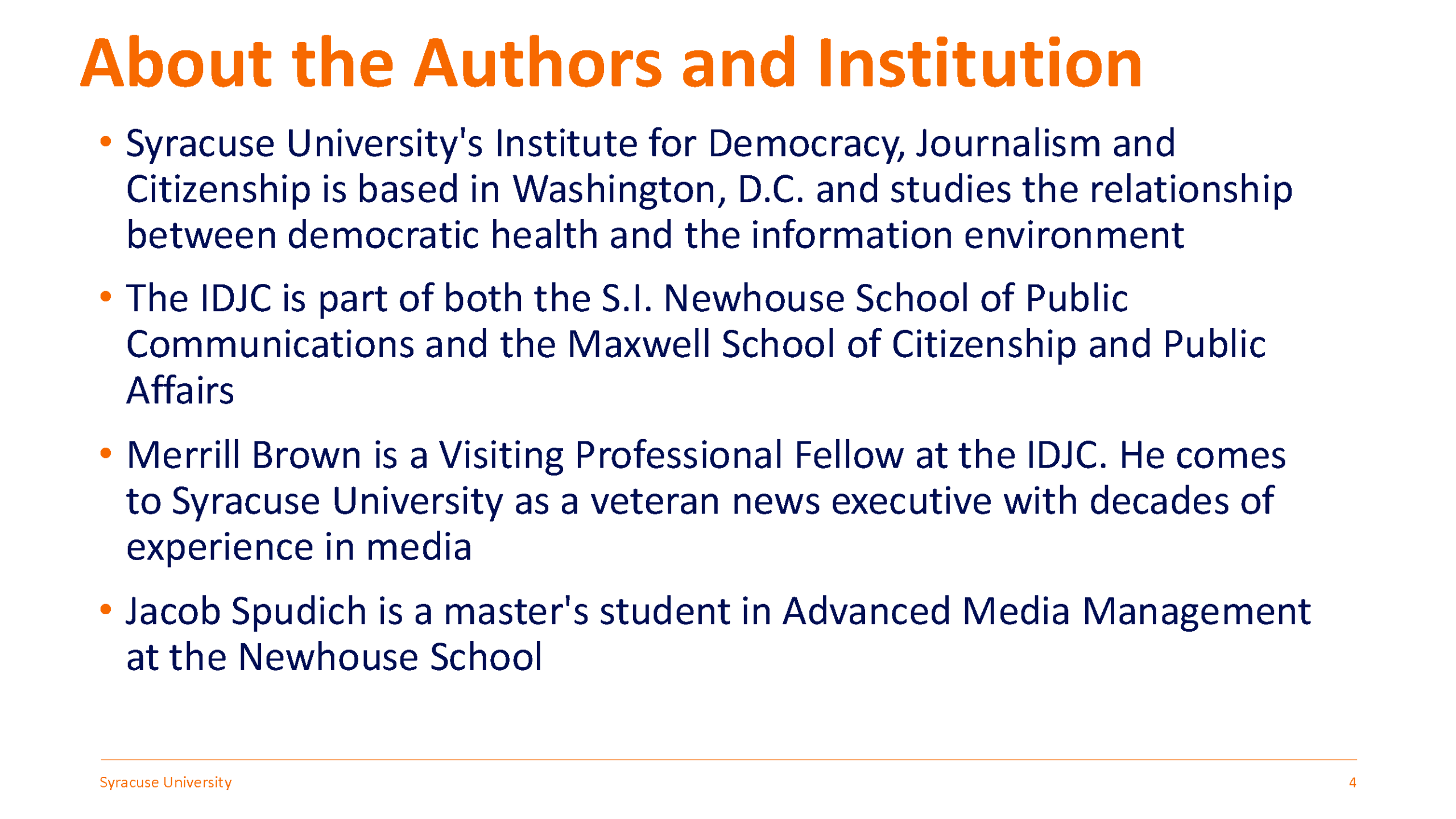
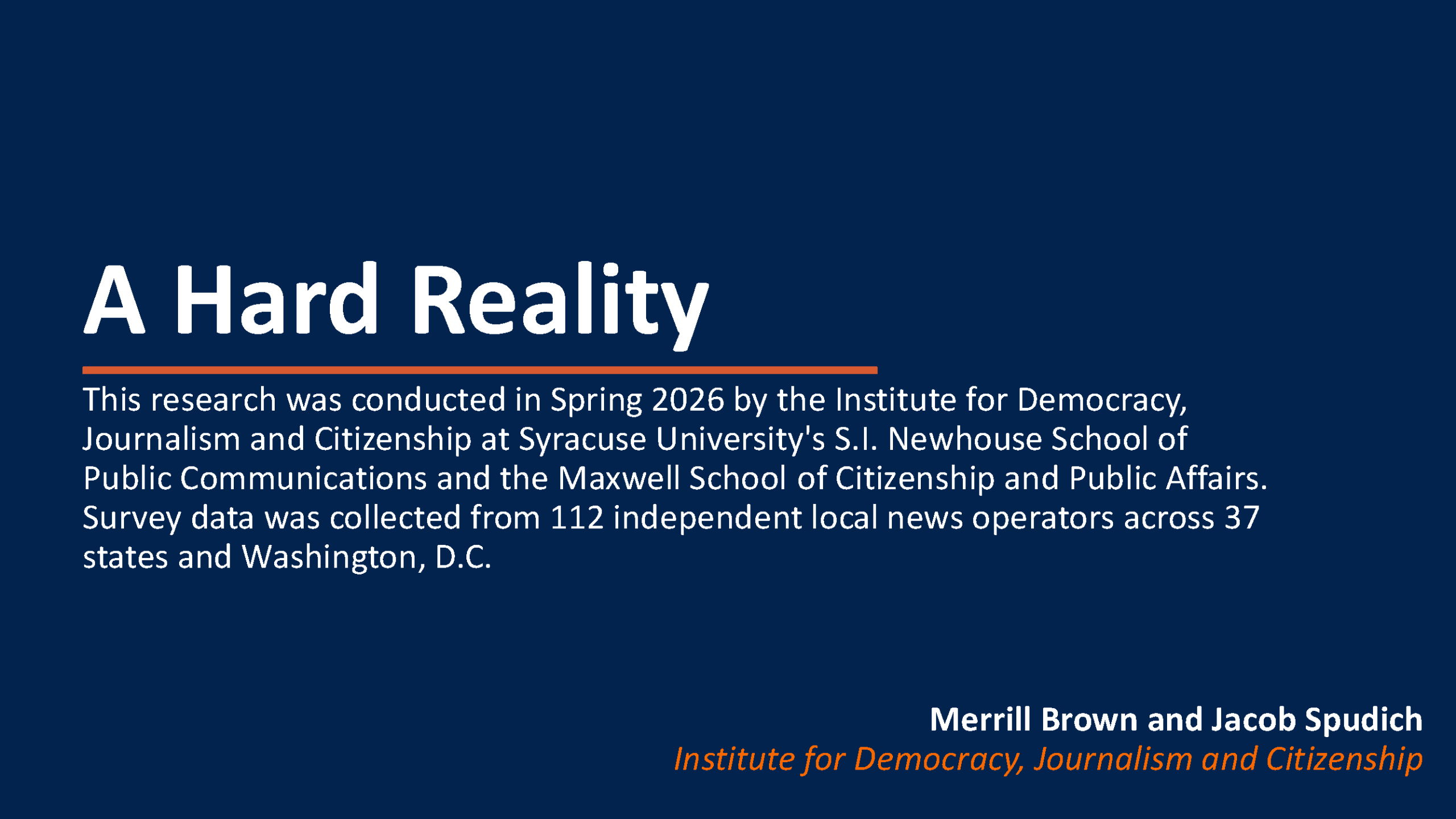
That is one of the most important conclusions of a survey we conducted in the spring of 2026 for Syracuse University's Institute for Democracy, Journalism and Citizenship, where Merrill Brown served as a visiting professional fellow. Jacob Spudich joined Brown as a researcher while completing his master’s degree at the S.I. Newhouse School of Public Communications.
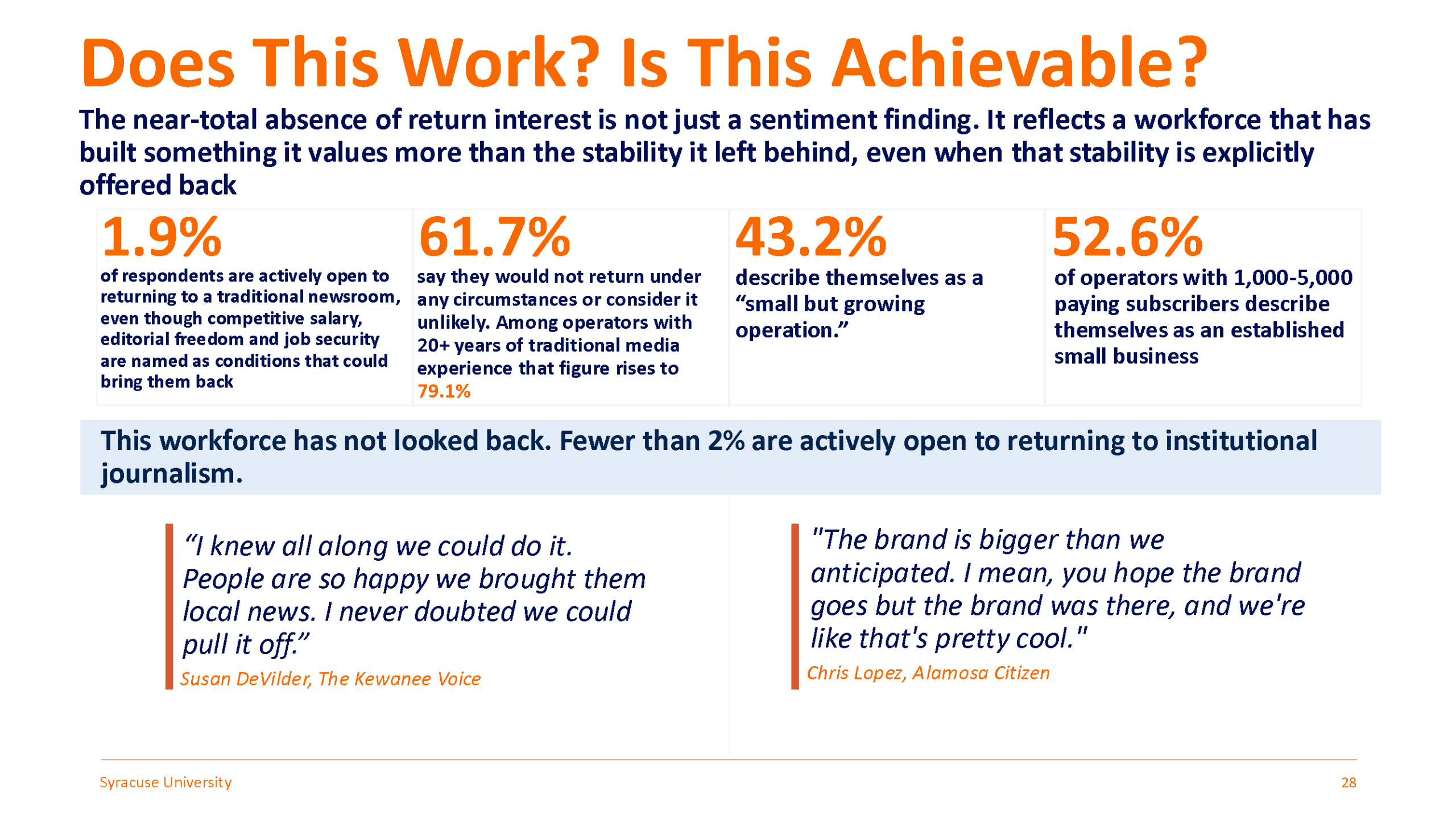
The entrepreneurs who participated in the survey demonstrate that small independent organizations can provide journalism their communities value and, in many cases, build businesses around it. But they have also demonstrated how extraordinarily difficult it is to create a sustainable local news enterprise.
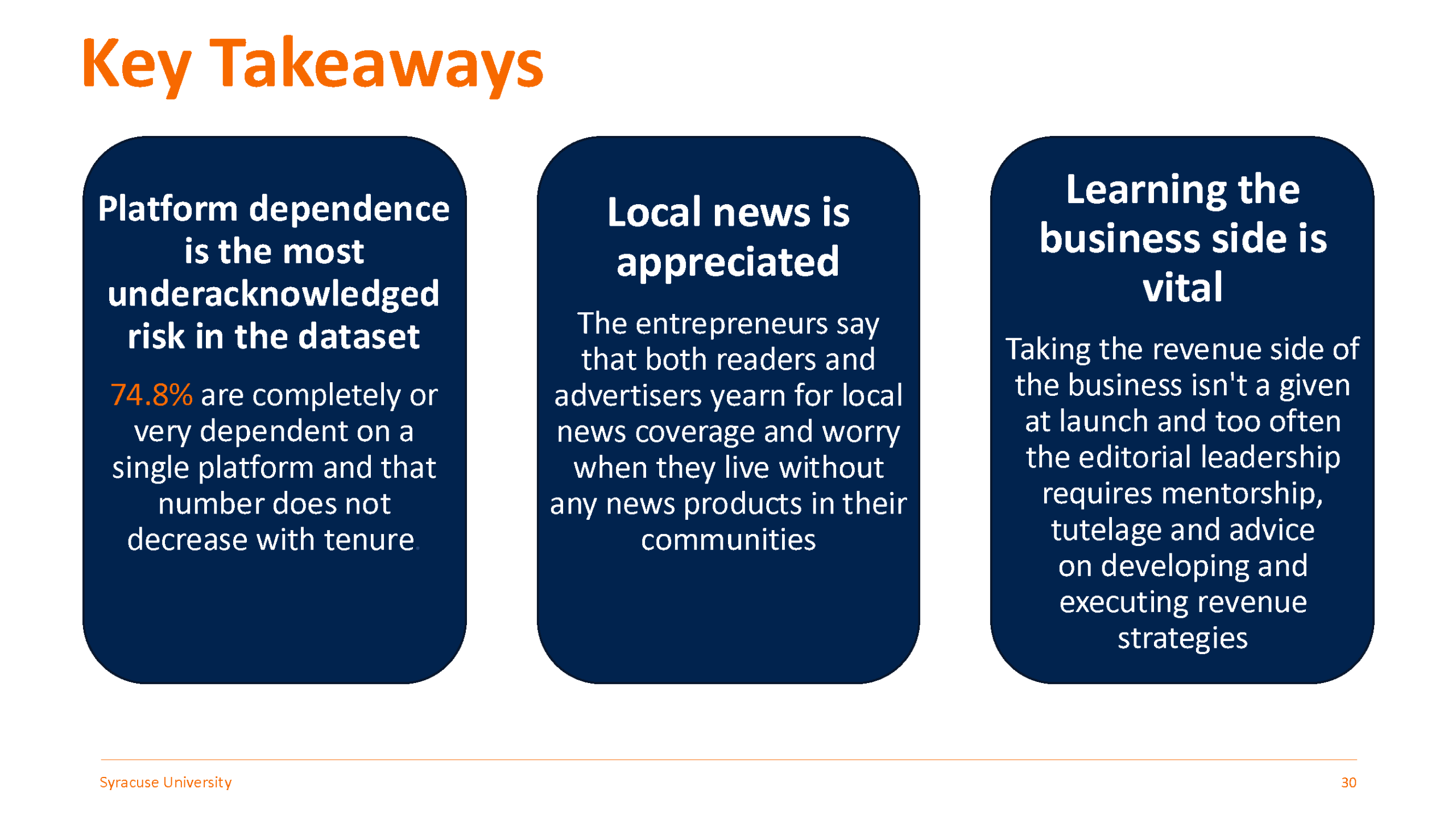
And the difficulties aren't principally journalistic. Many of the people in our study already know how to report, edit, write and produce news. What many have had to learn—often while simultaneously publishing every day—is how to run a business, find customers, sell advertising and sponsorships, seek foundation or other institutional support, understand their audiences, develop multiple revenue streams, manage technology, hire people and build an organization.
That distinction may be central to understanding the next phase of local news.
HIGHLIGHTS
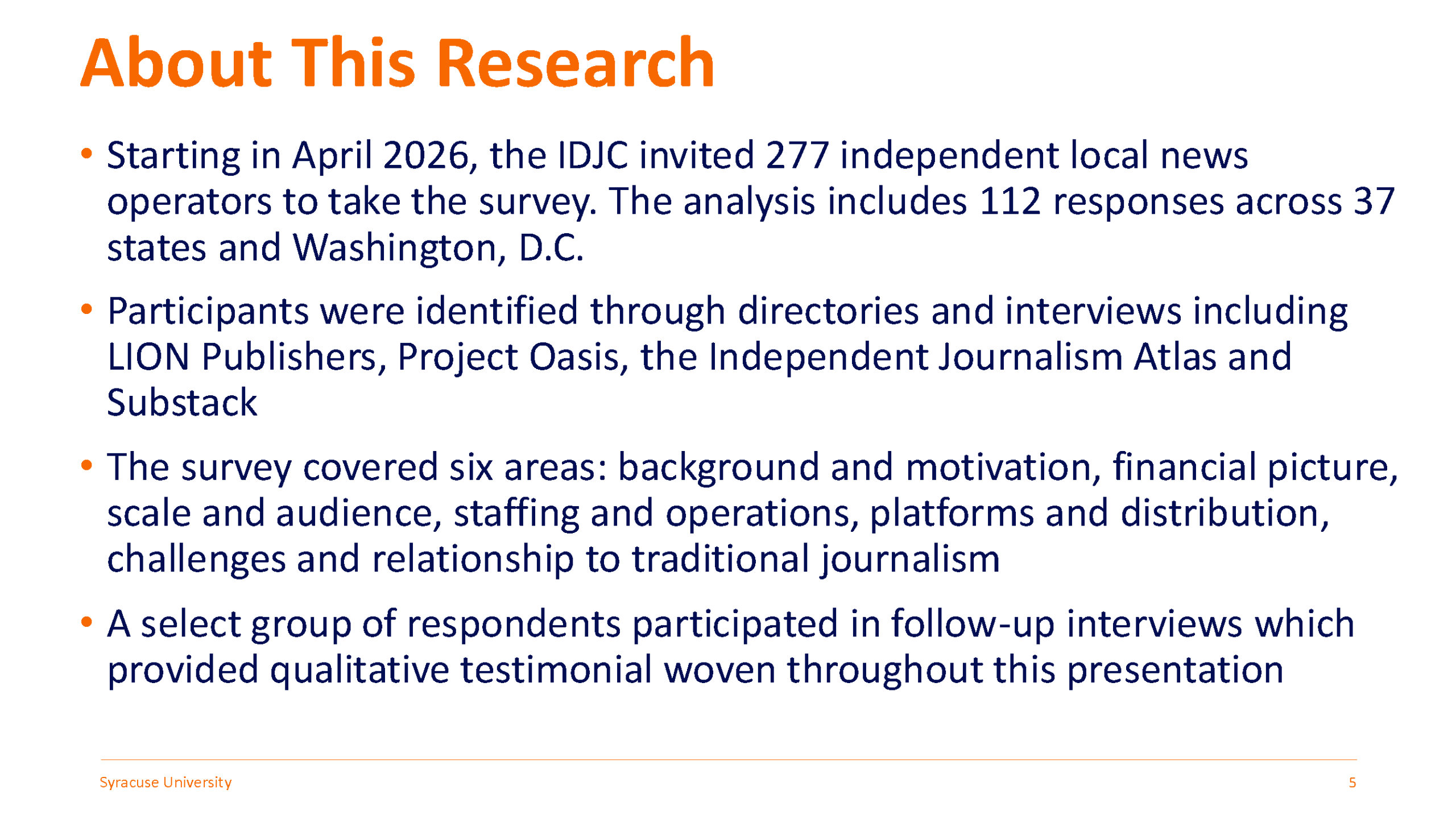
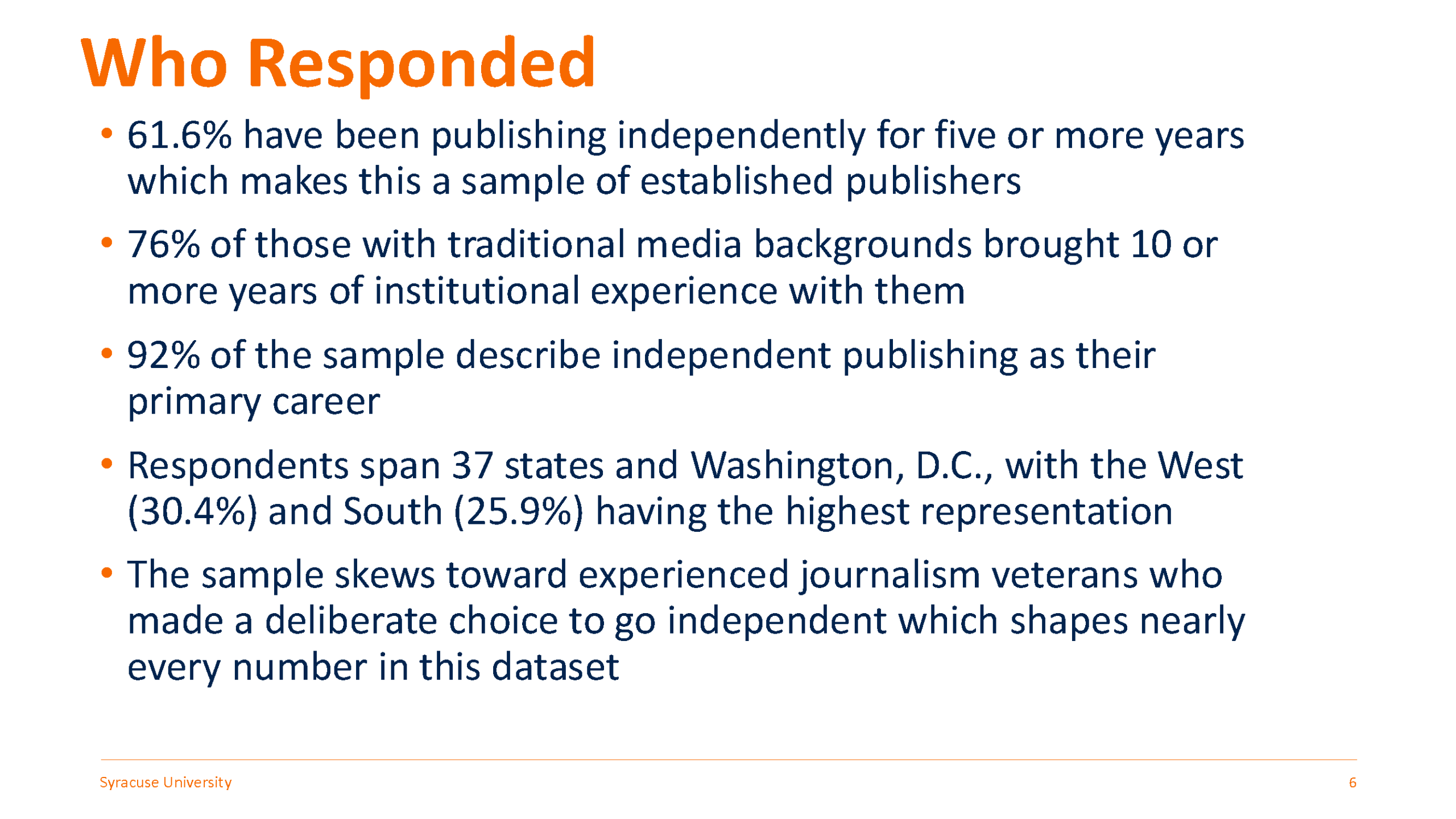
We surveyed 277 independent local news operators and received completed responses from 112 publishers in 37 states and Washington, D.C. What we found is both encouraging and sobering.
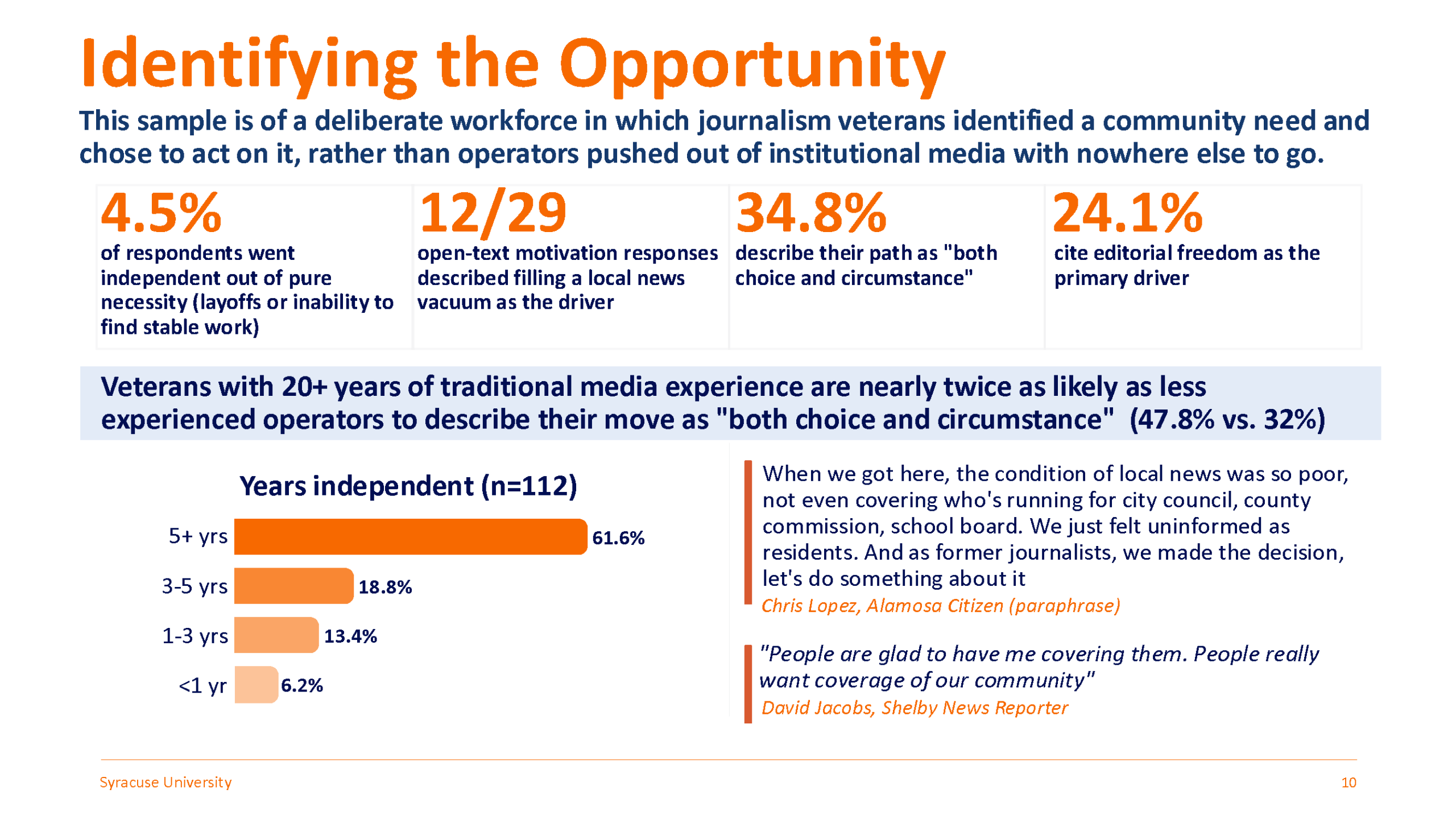
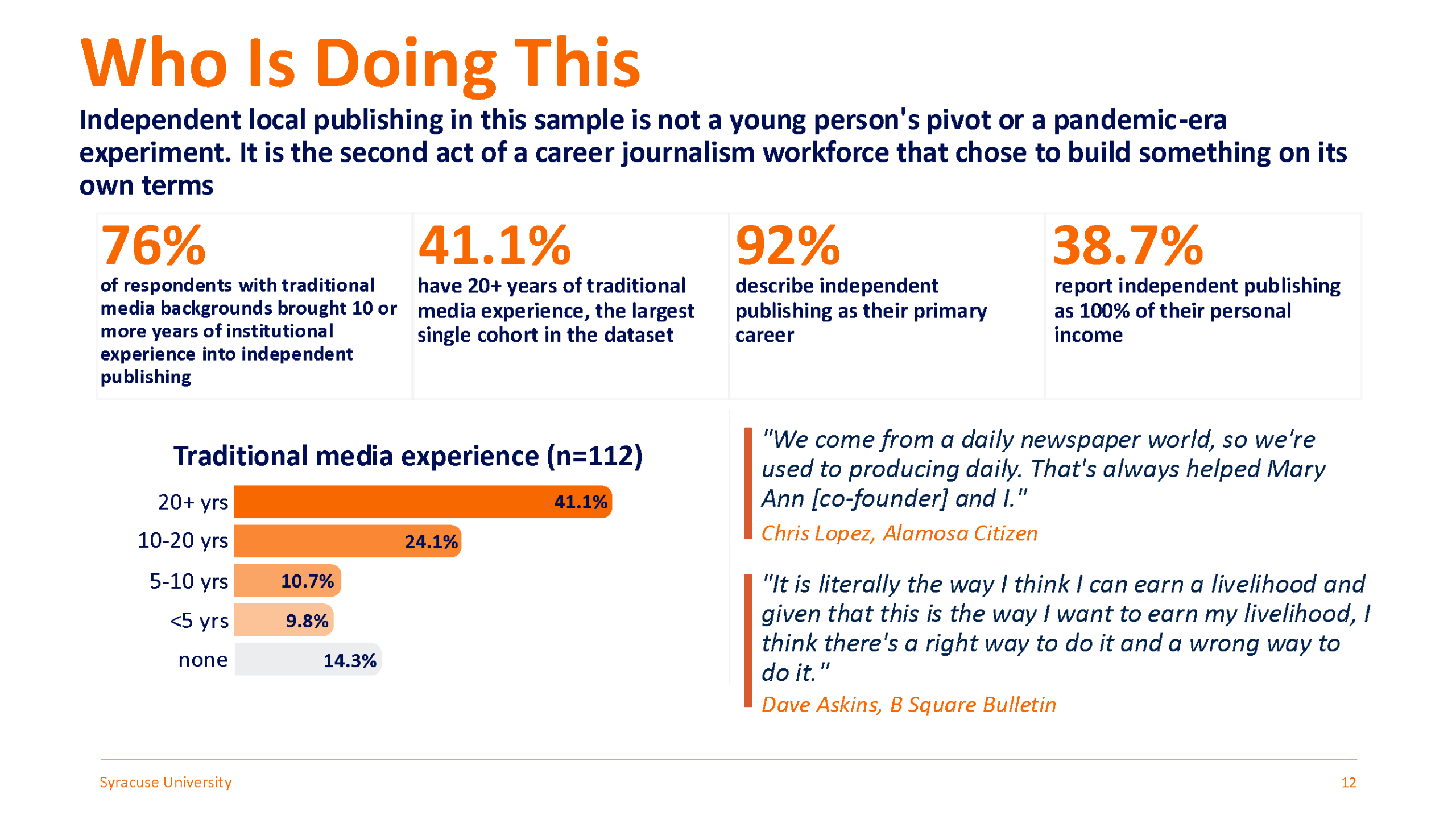
The people who responded are not, for the most part, newcomers experimenting with journalism. More than 61% have been publishing independently for five years or longer. Among those who came from traditional media, 76% have at least a decade of institutional experience and nearly half have 20 years or more. And 92% describe independent publishing as their primary career.
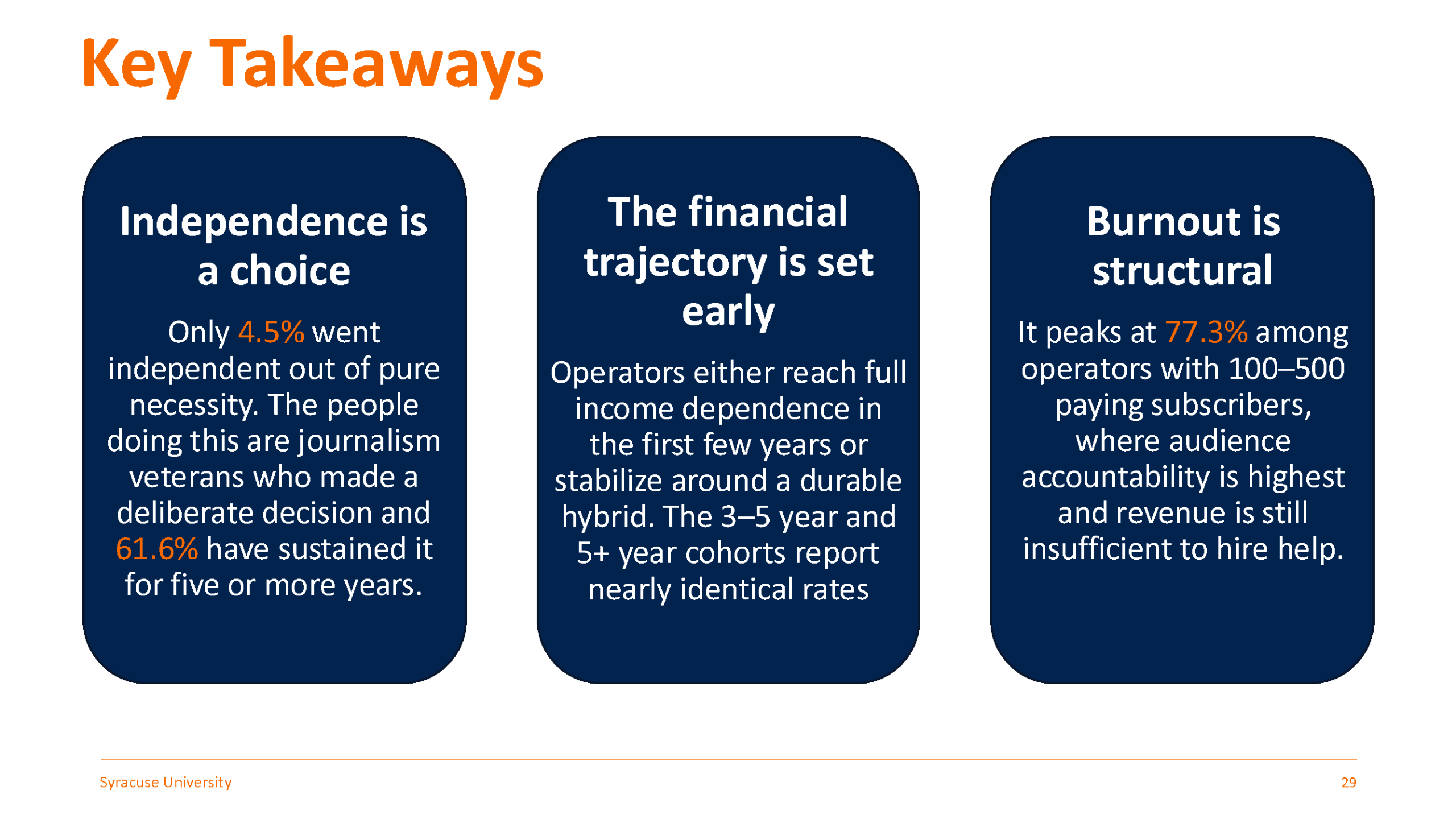
- Fewer than 5% of respondents said they became independent publishers out of pure necessity.
- Fewer than 2% said they were actively open to returning to a traditional newsroom.
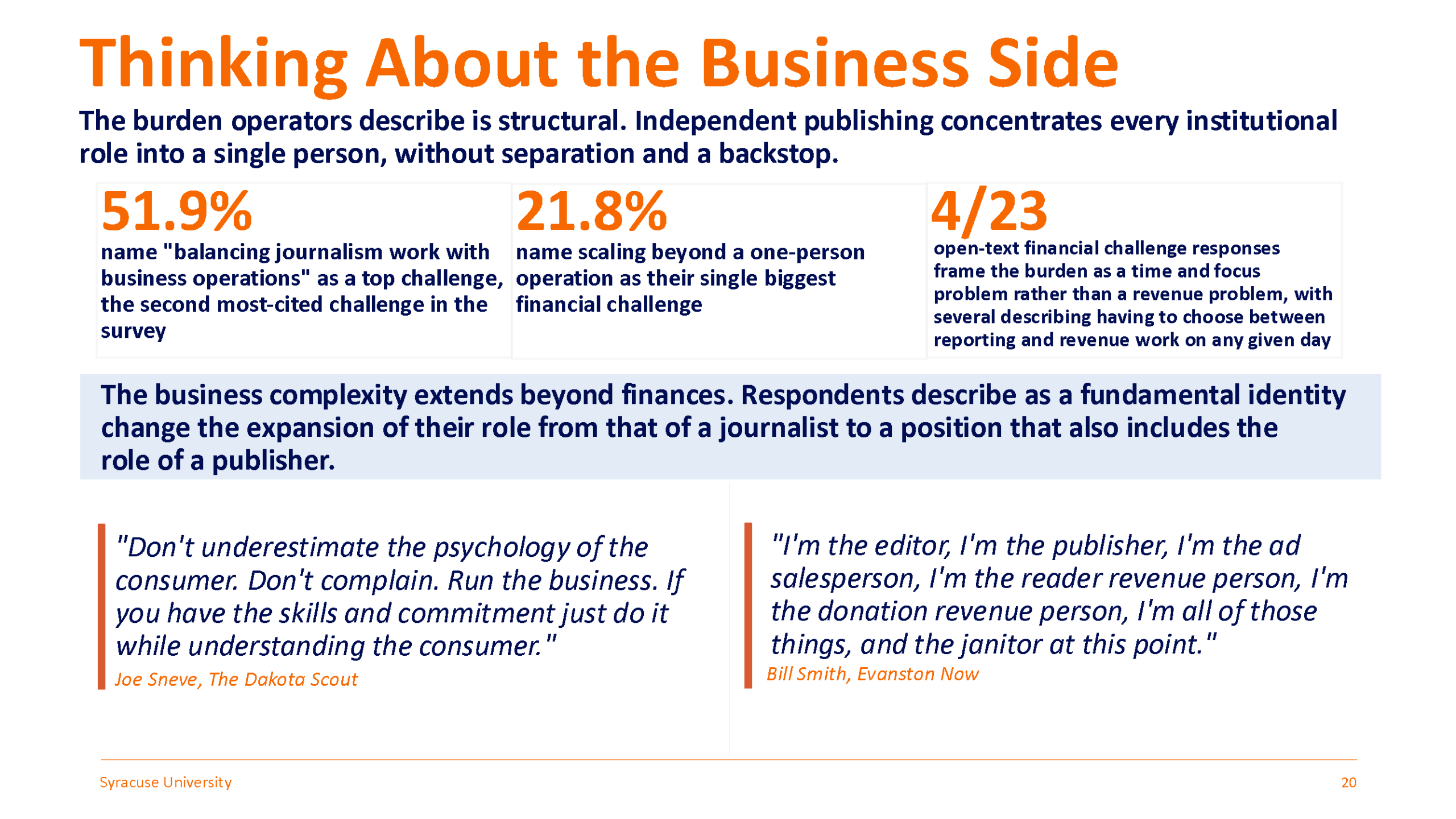
- More than half said balancing journalism with business operations is a top challenge. More than one in five said growing beyond a single member organization was one of the top financial challenges.
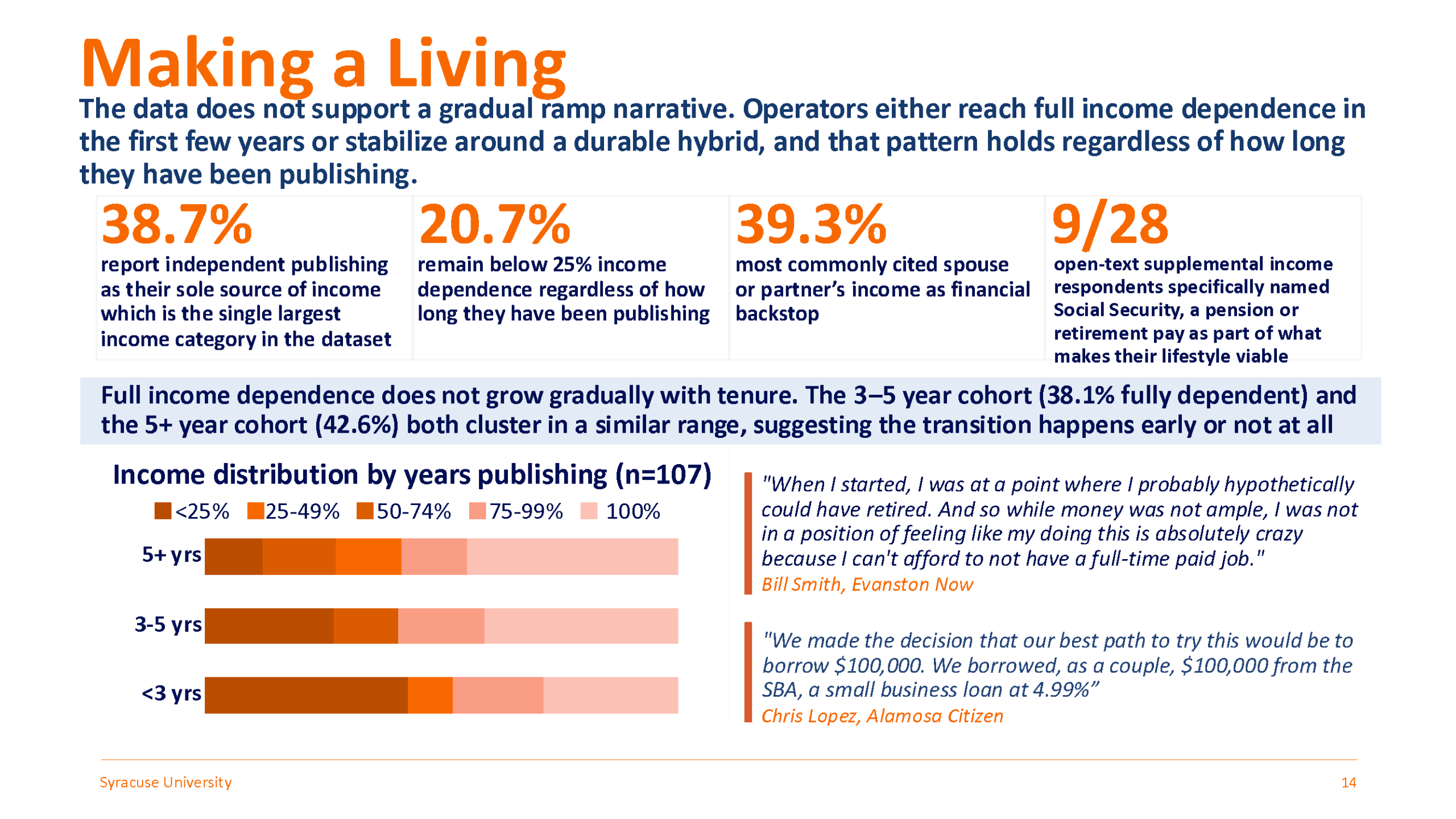
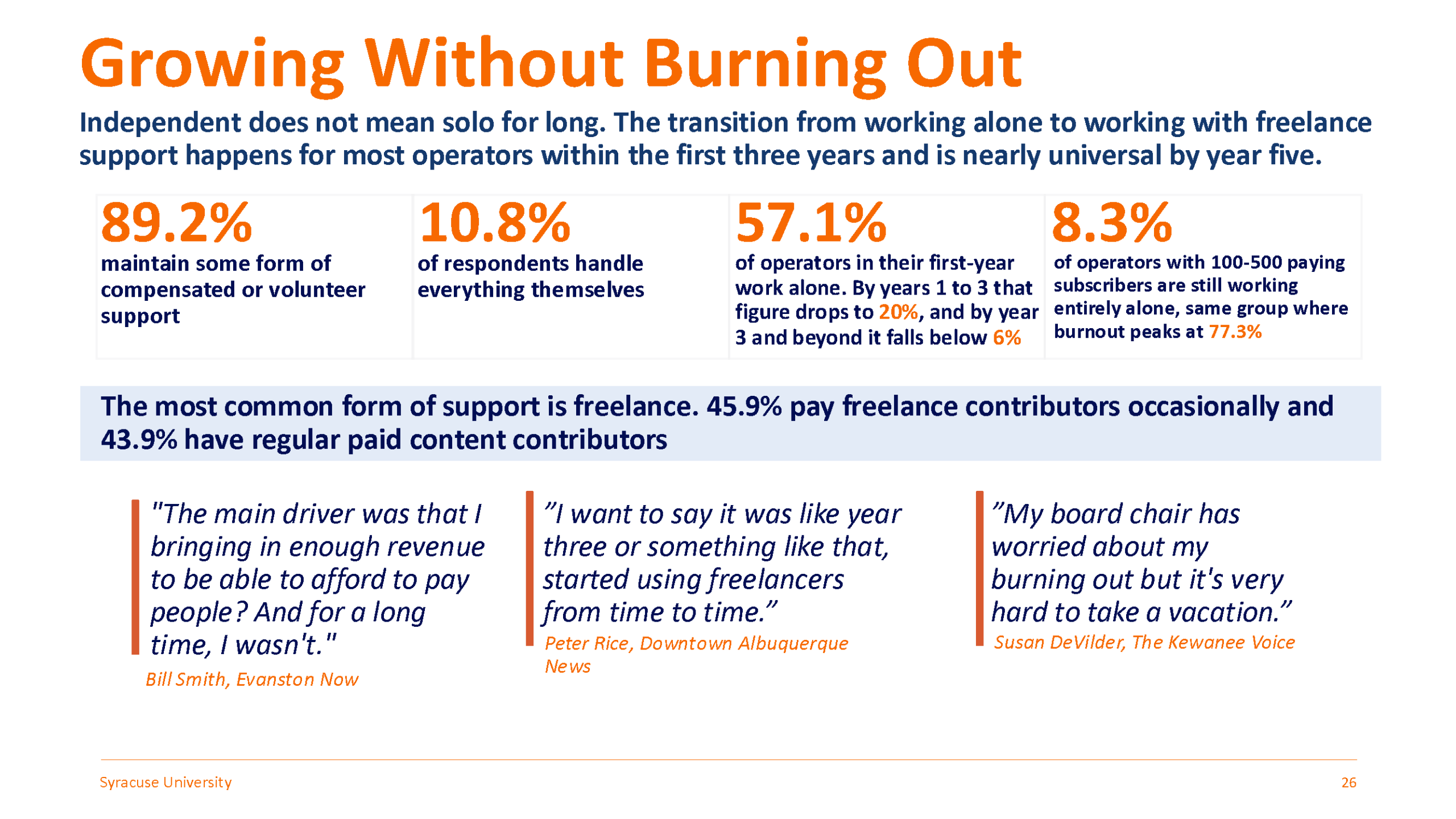
- About 4 in 10 respondents draw all of their personal income from their publications. But 1 in 5 still earn less than a quarter of their income from that news organization.
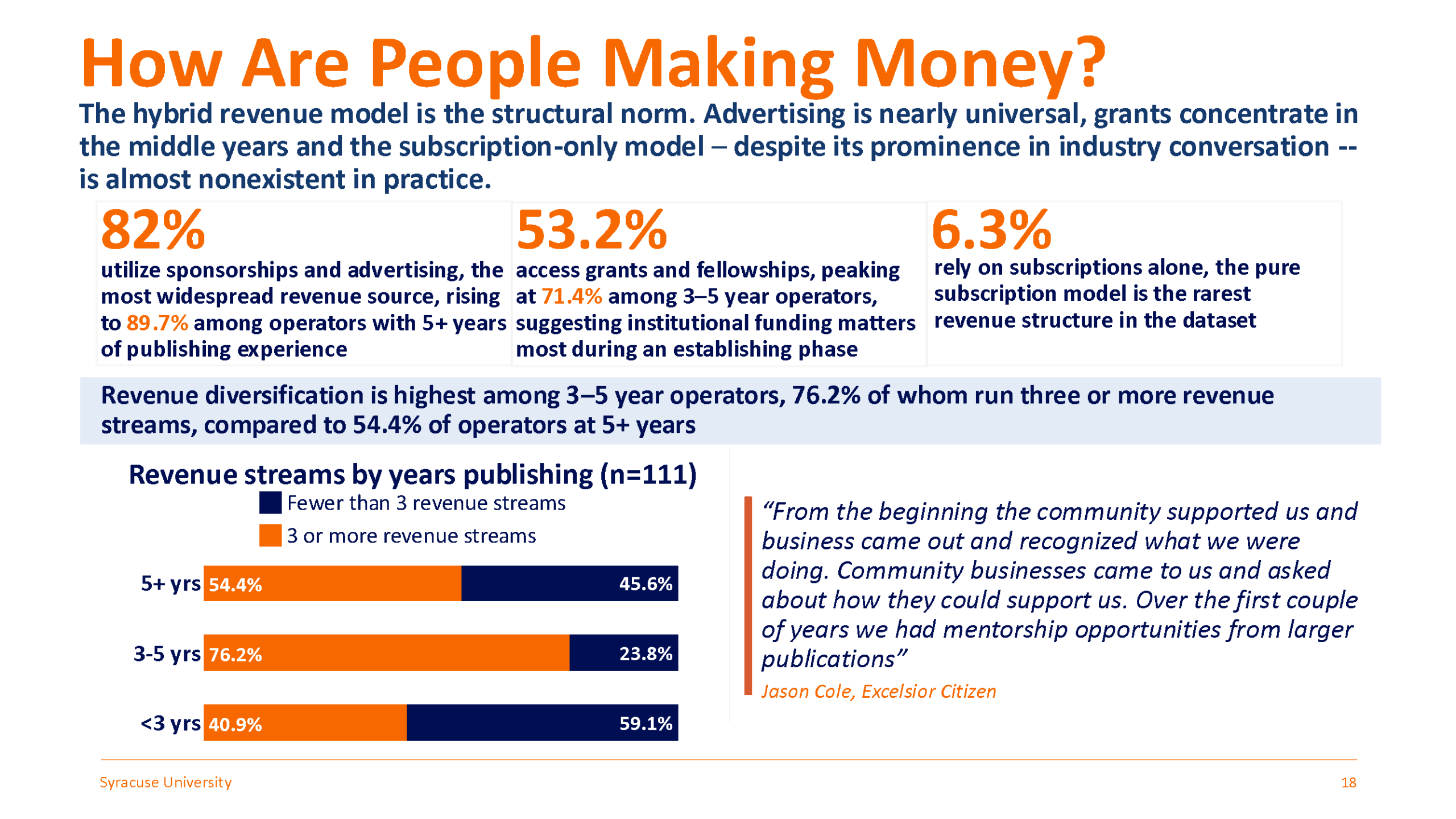
- 4 in 5 use advertising or sponsorship revenue models, dwarfing subscription-only efforts and also outnumbering grants and fellowships. Hybrid models combining some or all in various proportions were common.
- Local models aren’t interchangeable. Population and business density, income, access to philanthropy and civic culture impact viability and models of independent local publishing.
- The best local news entrepreneurs are also striving to build community institutions.
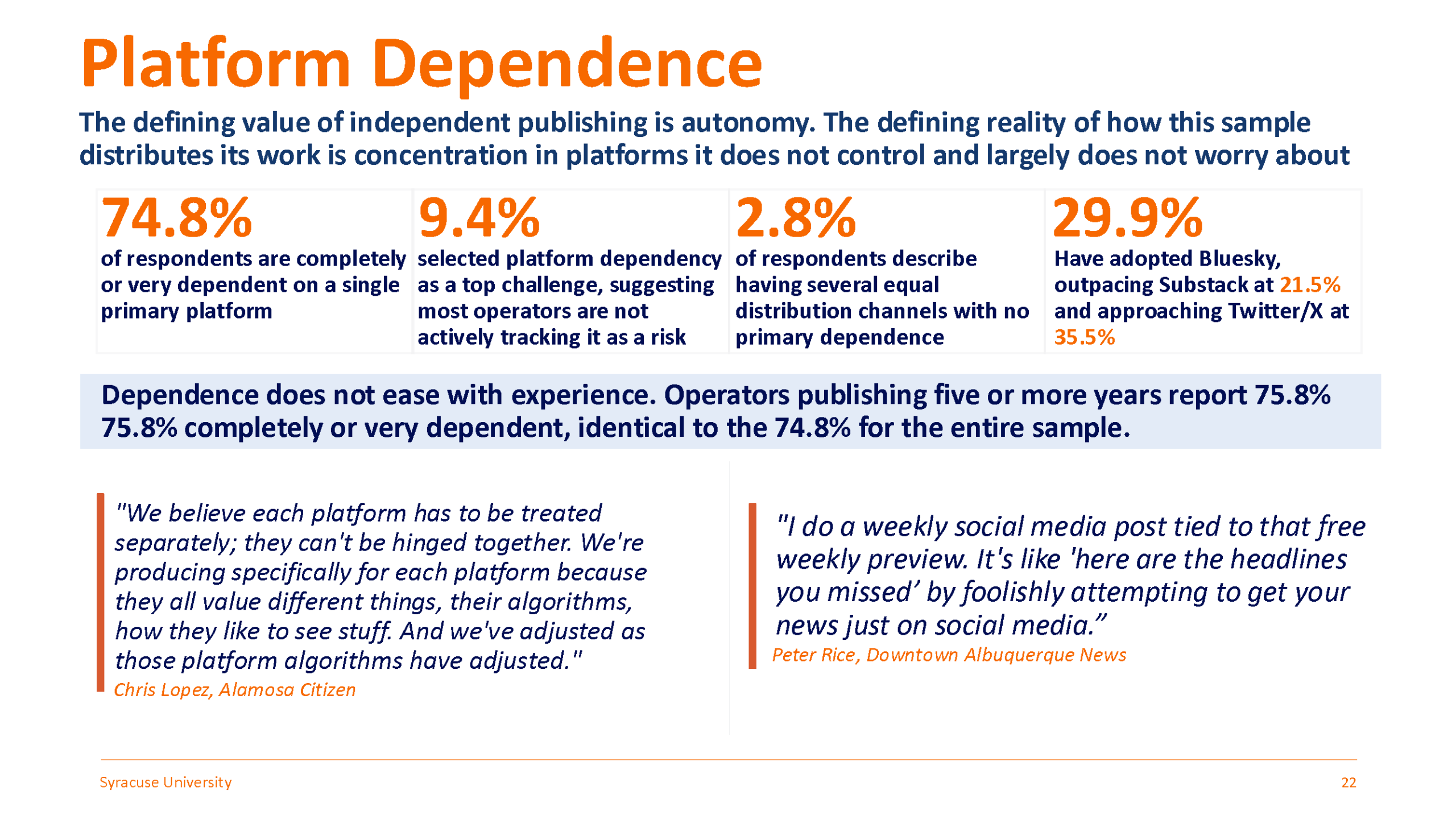
- Platform dependence may pose a real threat for as many as 3 in 4 respondents.
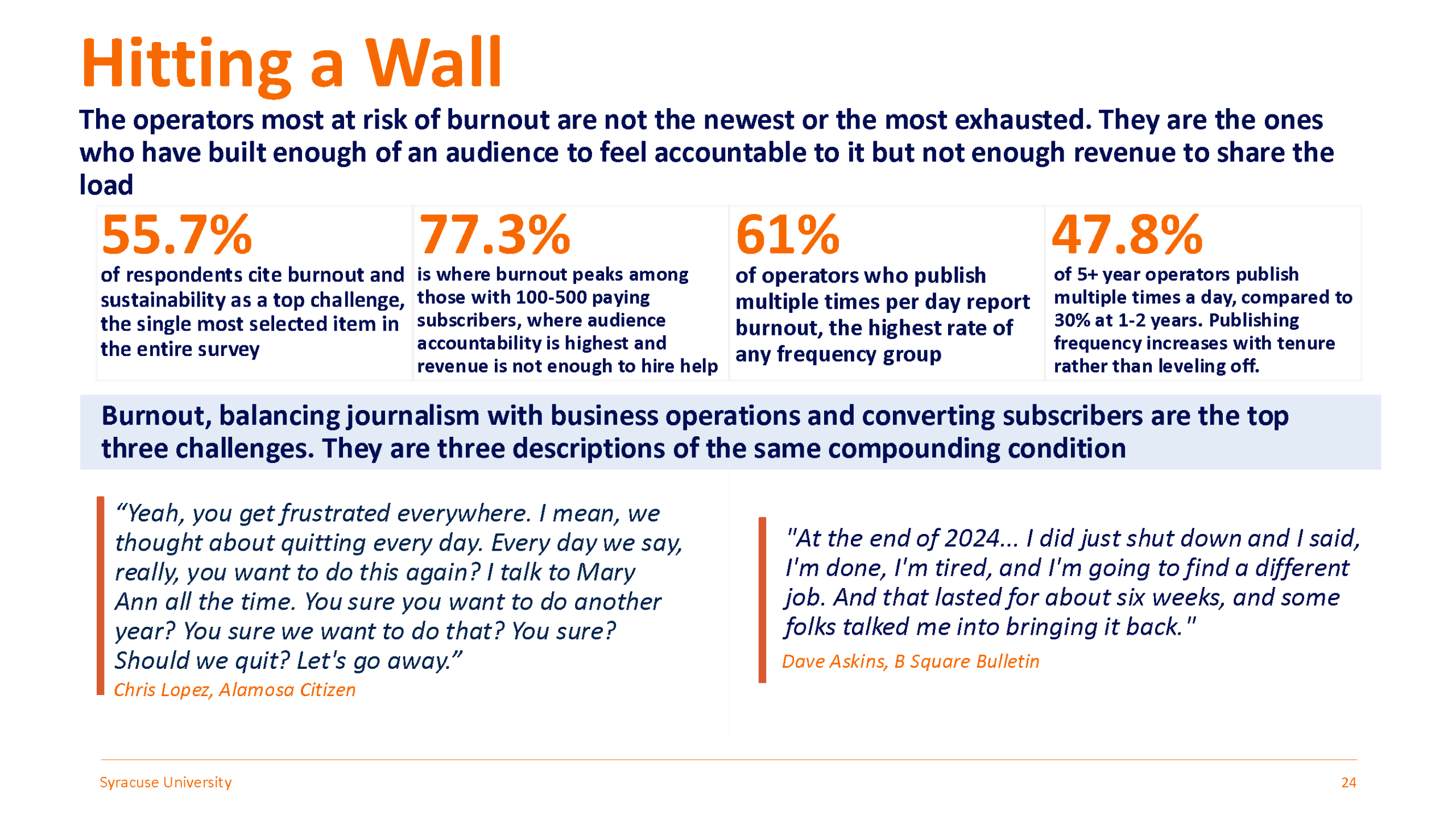
- Burnout and sustainability are major challenges for more than half of respondents with peak risk among those identifying as having 100-500 paying subscribers.
- Survival doesn’t always mean sustainability. Founders working unsustainable hours, or relying on a spouse’s salary, may not have a model that can be replicated or scaled.
To interview Brown and Spudich, contact merrillbro@gmail.com and jacobspudich@gmail.com